

Decomposition and Renewal: The Quiet Engines of Emotional Growth

Hello, Friends—
Recently, life has tested me with the need to draw boundaries. I’ve been feeling the full complexity of what that brings—anger, grief, heartbreak, and also knowingness, self-respect, even relief.

What’s swirling for me personally seems to mirror something larger. So many of us are awash in emotion—feelings of anger, grief, disbelief, disempowerment—as our nation descends further into fascism, intolerance, and indifference.
In the midst of all this, an artist friend invited me to submit a proposal for a symposium on decomposition and renewal. The call was open to soil scientists, artists, poets, chefs, musicians, and death workers. What came to mind immediately was the need to compost anger and grief—to transform it into a different, more life-giving, energy.
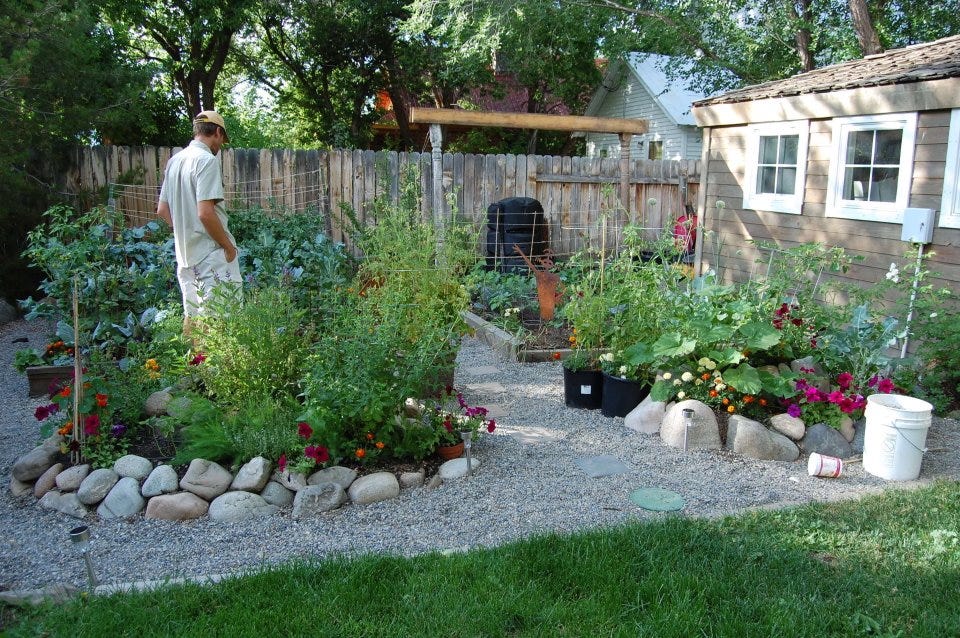
Hold onto your anger and use it as compost for your garden.
~Thich Nhat Hanh (as spoken to bell hooks)
I recalled the piece about composting anger into sacred rage I’d written in the days following the presidential election. Returning to it today provided me a dose of the medicine I need now. May you find it just as poignant.

Decomposition and renewal are the quiet engines of ecosystems. In a healthy ecosystem, nothing simply disappears. A fundamental principle in ecosystem ecology is: One organism’s waste is another’s food—an idea that describes how ecosystems recycle nutrients and energy to ensure that virtually nothing is wasted. When plants shed their leaves, animals die, and roots and microbes complete their roles, decomposers break down this complex organic matter into simpler substances that include carbon dioxide, water, and inorganic nutrients (e.g., nitrogen, phosphorus, and sulfur compounds; and calcium, magnesium, and potassium ions). These materials become the available building blocks for the primary producers (autotrophs that convert sunlight (or chemical energy), water, and minerals into organic matter) that form the base of the food chain. The cycle then repeats itself, again and again, ad infinitum.
Absent this ongoing process, ecosystems suffer. There can be no renewal without decomposition, no decomposition without renewal. Without decomposition, nutrients would become trapped in dead plants and animals, soil fertility would decline, plant growth would slow, and eventually, the whole damn thing would grind to a halt. The corollary is also true: without the renewal of uptake, nutrients released by decomposition would be lost from the system via leaching, erosion, or export. As this occurs, soils would lose structure and biological activity, plants would fail to re-establish, food webs would simplify and unravel. To thrive, we need decomposition and renewal in both ecosystems and in our lives.
It is in the context of these ideas that we might consider how to manage our emotions. For instance, how do we allow anger to cycle through us, providing residence just long enough without allowing it to stagnate? How do we find a way to compost it, transforming its energy and lessons into the necessary building blocks of renewal, the fuel for growth?
In the same way ideas take root only when they move from the mind into the body, transforming our emotions is also a bodily affair. Practices that revolve around doing and being are particularly effective medicine. This week, I spent time meditating, writing, skiing, walking by the river, and being with friends. None of these activities was a silver bullet, but each did its quiet magic, connecting me to my breathe, moving me into my body, calming me, filling me. And, today, I felt my energy and my perception noticeably shift. I feel renewed.
To renewal during these difficult days.
xo Wendy
Thank you for this. I love how you take the elements of nature to communicate on a cellular level. Reading how you process the animal/mineral and spiritual is something literally every human being should read (and eventually understand). 🙏🏻
Deep rest when tired. Composting the need to always be “on.”