

Travel: Running Away or Running Toward?
What Migration Teaches About Movement

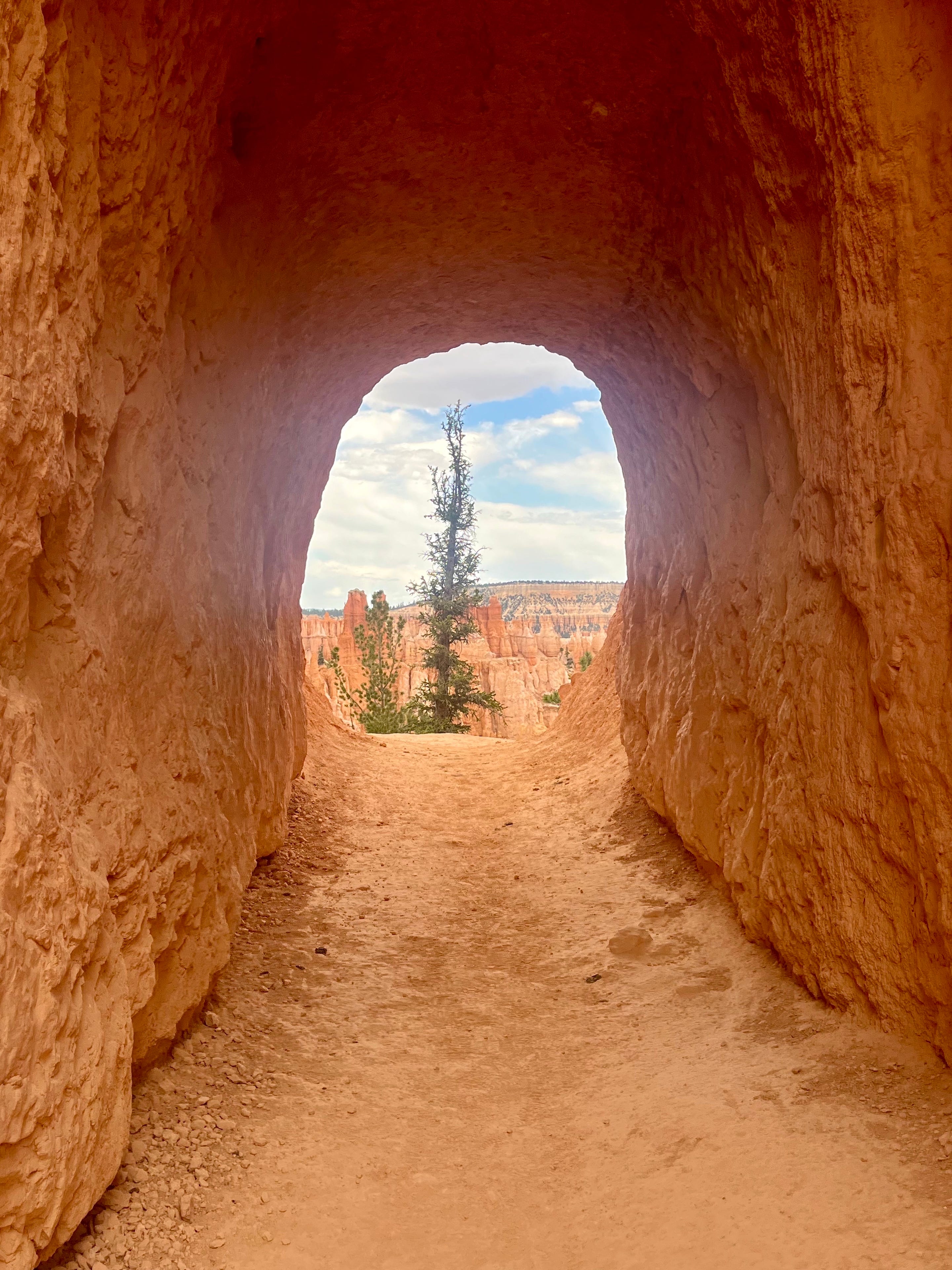
Hello, friends—
I’m picking up the Gypsy Wagon next week (!!!!!). Friends keep asking where I’m going, and I haven’t had much in the way of an answer. I don’t have an itinerary—partly because I didn’t have a drop-dead date until yesterday, and partly because, by my estimation, the best travel routes are guided by conditions—season, temperature, weather—and those conditions will depend upon start date. (Yup, it’s all felt a little circular.) And mostly, I just don’t like itineraries: I find them overly constraining and lacking in serendipity and magic.

A road trip is no different. Gypsy’s build date was initially planned for late March or early April. And…as with all construction projects…it’s now late April. So, I’ve been waiting and not planning. Waiting and not planning.
As I’m sure you’ve noticed, climate (and the world) has been a rolling shitshow this year, leaving me with enough uncertainty that planning seemed futile. Could I make it for the super blooms in Death Valley? (A faint possibility at the outset; now long past.) Is it now too late—and too hot—to be in the desert at all? Will my friends be in the area or have they left? Will my body be craving the beach? Are gas prices going to melt this whole thing down?
Uncertainty aside, the questions have me thinking about the well-worn script about long-term travelers and nomads—people who don’t settle: we’re escaping something, avoiding responsibility, refusing to grow up. The question takes various forms but ultimately comes down to: What are you running from?
Long ago, this question might have triggered me; now, it holds no emotional weight. When I was younger and still figuring out how to exercise—and actualize—the things that most lit me up (many of which were somewhat non-conformist), the triggering would have reflected an inner conflict between what I was supposed to do and what I was called to do. Those inner tensions have long been resolved (and I write about them in The Understory).

For me, it’s the wrong question—I’ve been long-clear that I’m moving towards. A moving towards is a very different energy—one born of deep curiosity, of desire for freedom and movement, of embodied listening. And, as a people, we’ve come from a long heritage of nomadism; we’ve just forgotten it.

We’re not alone in our innate need to move about. Juvenile eagles leave natal territories when staying requires endlessly competing with siblings for the same limited resources. They disperse to find their own. Humpback whales migrate 5,000 miles between polar feeding grounds and tropical waters to gorge on summer krill in cold waters and calve in warm waters.
Monarch butterflies undertake a massive annual, multi-generational migration across North America, flying up to 3,000 miles along two flyways from the U.S. and Canada to the oyamel fir forests in central Mexico, navigating with a time-compensated sun compass that uses sun position and internal clock; on cloudy days, they navigate by magnetic compass. Wolves naturally leave their natal pack (a process known as dispersal) primarily to find a mate, avoid inbreeding, and establish their own territory.
All of these animals follow embodied homing systems.
And, for those who feel more comfortable closer to home, it’s also true that some organisms stay rooted for lifetimes—bristlecone pines anchor mountainsides for thousands of years, coral polyps build reefs over centuries, geoduck clams remain burrowed in the same spot their entire lives (as long as 140 years).
Nature rewards both strategies. Thus, the question isn’t whether movement is legitimate—it’s whether you’re following what your body is telling you.
The question of travel as escapism becomes real when you’re actively trying to escape the life you’re living. Our modern systems create this: we have jobs our bodies struggle to tolerate, cities that fray our nerves, and economic structures that bind us to mortgages, schedules, and obligations, that together, amount to elaborate cages. I watch this in people I care about—chronically anxious, exhausted, trapped. In this context, travel (and wine and scrolling and sugar) becomes a means of escape.
Travel holds a different space for me. Adventure writer Mark Jenkins wrote:
Adventure is a path. Real adventure—self-determined, self-motivated, often risky—forces you to have firsthand encounters with the world. The world the way it is, not the way you imagine it. Your body will collide with the earth and you will bear witness. In this way you will be compelled to grapple with the limitless kindness and bottomless cruelty of humankind—and perhaps realize that you yourself are capable of both. This will change you. Nothing will ever again be black-and-white.
And, this is what I seek: firsthand encounters with the world.
We are no different than any other nomadic animal—except that our big brains have gotten in the way of our embodied knowing. My body is telling me it’s time to go—and I’m listening.
See you on the trail.
xo Wendy
Love this, Wendy! Is "through the looking glass" your photo? A beauty.
And your thoughts about nature rewarding both strategies—or different kinds of movement. xo
love that big brain vs embodied knowing . . . could be the title of a book ;-)